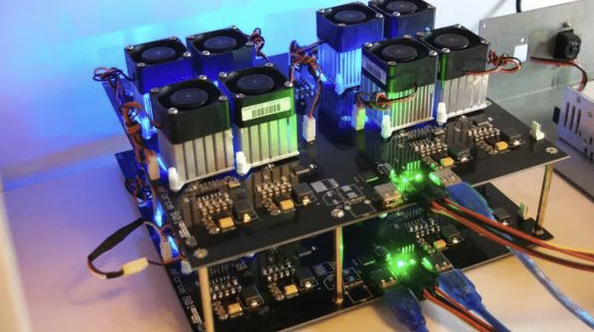
Selecting components for a crypto mining rig requires matching GPUs or ASICs to a scalable motherboard, power, and cooling. Assess algorithm support, hash rate, and energy efficiency. Plan a modular setup with reproducible OS and stable drivers. Implement effective cooling and quiet operation while ensuring predictable maintenance. Monitor power draw, temperatures, and network difficulty to maintain profitability. The framework sets the stage for deeper technical setup, optimization, and scalable expansion opportunities that demand careful decision making.
How to Choose Your Mining Platform
Choosing a mining platform requires evaluating hardware compatibility, power efficiency, and performance benchmarks.
The analysis centers on Choosing algorithm, power efficiency, and selecting GPUs, mining rigs, hash rates, profitability.
Selection focuses on compatibility with intended algorithms, efficient cooling, and stable drivers.
Clear criteria include support for chosen GPUs, scalable rig architectures, consistent hash rates, and predictable profitability under defined workloads and energy costs.
Estimate Power, Profit, and Break-even
Estimating power draw, anticipated revenue, and break-even timelines is essential for evaluating a mining rig’s economic viability. The analysis quantifies total electrical load, equipment efficiency, and fixed versus variable costs. Mining profitability hinges on hardware performance, network difficulty, and energy pricing. Sensitivity testing reveals margin ranges under different price and demand scenarios, guiding scalable investments while maintaining financial discipline.
Set Up a Stable Operating System and Software
Setting up a stable operating system and software requires a reproducible baseline configuration that maximizes uptime and minimizes drift in performance metrics.
The system selects a minimal, headless OS with verified boot and immutable logs.
Energy efficiency is optimized through kernel tuning and resource isolation.
Firmware updates are scheduled and tested, ensuring compatibility while preserving reproducibility and security guarantees for long-term mining operations.
Optimize Cooling, Noise, and Longevity
Optimizing cooling, noise, and longevity focuses on delivering effective thermal management while minimizing acoustic impact and component wear.
targeted airflow and heat sinking are evaluated through measurable temperature correlations, ensuring remaining GPU/CPU cores operate within manufacturer-recommended margins.
Cooling efficiency and noise reduction strategies balance performance and power.
Longevity implications hinge on hardware compatibility, sustained thermal headroom, and predictable maintenance intervals.
Frequently Asked Questions
What Are the Legal Considerations for Crypto Mining in My Area?
The legal considerations vary; one must assess regulatory compliance, tax reporting, and insurance coverage, while seeking mining incentives and clear hardware upgrades strategies. Legal consent is essential, profitability signs depend on jurisdiction, and ongoing compliance ensures sustainable operations.
How Do I Handle Mining Incentives and Tax Reporting?
A flicker of circuitry evokes a landscape of compliance: mining tax obligations and incentive reporting require meticulous records, declared income, and adaptable accounting. Legal considerations demand timely documentation, transparent disclosures, and precise classification of rewards for accurate tax treatment.
Which Insurance Covers Mining Hardware Damage and Theft?
Insurance coverage for mining hardware damage and theft depends on commercial property or specialized equipment policies; ensure coverage explicitly includes mining rigs, temperature-controlled environments, and off-site storage. Hardware theft provisions require theft loss, validation, and contractor-access controls.
See also: Why Technology Adoption Is Faster Than Ever
How Often Should I Replace or Upgrade GPUS for Profitability?
Like a metronome, the hardware lifecycle dictates replacements every 1–3 years for profitability; gpu depreciation accelerates with wattage and demand. Regular assessments of efficiency, thermals, and repair costs inform optimal upgrade timing and long-term cost control.
What Are Signs of Declining Mining Profitability Beyond Break-Even?
Signs of declining profitability beyond break-even include rising power costs eroding margins, reduced hash rate efficiency, escalating cooling and maintenance expenses, diminishing coin rewards, workflow inefficiencies, and increased downtime, collectively signaling unsustainable operations despite market fluctuations and freedom-oriented experimentation.
Conclusion
In sum, the rig stands as a disciplined convergence of components, aligned by measured metrics and repeatable processes. Silent equilibrium emerges where efficiency and reliability meet, with temperatures kept within safe boundaries and electrical margins maintained with conservative restraint. As workloads fluctuate, data-driven adjustments preserve steadiness, while modular design preserves future compatibility. The result is a tightly regulated system whose predictable cadence invites quiet confidence and scalable growth without overextending the underlying infrastructure.